

Simplifying Homeownership
See EXACTLY How Much Home You Qualify For Today!

Simplifying Homeownership
See EXACTLY How Much Home You Qualify For Today!

Learning Center

Buying a Home in Kenmore, WA: 2026 Mortgage Guide
The quick answer: Kenmore's typical home value is around $1,008,000 in 2026, but first-time buyers have a real path here: downtown condos and townhomes near the waterfront, Log Boom Park, and the Burke-Gilman Trail offer entry points below the city median. With 30-year rates in the low 7s, the winning strategy is pairing a local pre-underwrite with Washington State down payment assistance if you qualify.
Kenmore's 2026 housing market at a glance
Kenmore sits at the north end of Lake Washington — small-town feel, highly rated schools (Inglemoor High is a 10/10), and quick access to both Seattle and the Eastside. Demand consistently outruns supply, and desirable homes still draw multiple offers.
- Typical home value: around $1,008,000 (Zillow Home Value Index, July 2026)
- Market tempo: competitive; turnkey listings move in days, many sell at or above asking
- 30-year fixed rates: hovering in the low-7% range as of September 2026
Neighborhoods to know
Downtown core: newer condos and townhomes with walkable waterfront access — the most realistic first purchase for many buyers. Inglewood & Moorlands: established, price above the city median. Northshore Summit, Uplake & Arrowhead: each with distinct character and housing stock worth touring with your agent. The Burke-Gilman Trail and Log Boom Park run through it all — location near the trail commands a premium.
The loan strategy that works in Kenmore
- First-timers: look at condos and townhomes first. The downtown core's newer construction is where budgets stretch furthest. Just have your lender verify the condo project's financing eligibility early — some projects restrict FHA or have litigation that complicates conventional loans.
- Use WSHFC if you qualify. Washington State Housing Finance Commission programs bundle a first mortgage with down payment assistance — a genuine path to homeownership for buyers without a big down payment saved.
- Run the payment before you tour. On a $750,000 townhome with 10% down ($675,000 financed) at roughly 7.25%, principal and interest run about $4,600/month before taxes, insurance, and HOA dues. Know your all-in number.
- Consider a 2-1 buydown. Seller-paid buydowns are negotiable even in competitive markets — they lower your payment in years one and two while you settle in.
A local note
I'm based right here in Kenmore, and I work with buyers across the Northshore every week. There's no substitute for a lender who knows which condo buildings finance cleanly and which streets carry the premium — that's the advantage of going local instead of dialing a national call center.
FAQs: home loans in Kenmore, WA
Who is the best mortgage lender in Kenmore, WA?
The best lender for you is a local broker who knows Kenmore's condo projects, closes on Northshore timelines, and offers conventional, FHA, VA, and jumbo options. Said Hamood ("Said the Lender") is a mortgage broker based in Kenmore serving buyers across the greater Seattle area.
Can a first-time buyer afford Kenmore?
It's a stretch for detached single-family at the median, but condos and townhomes — especially paired with WSHFC down payment assistance — make it realistic. The key is an honest budget conversation before you start touring.
How much down payment do I need in Kenmore?
As little as 3–5% with conventional or FHA programs, though 10–20% strengthens both your payment and your offer. VA-eligible buyers may need 0% down.
Are Kenmore condos hard to finance?
Some are, some aren't — it depends on the project's budget, owner-occupancy ratio, and insurance. Your lender should review the condo questionnaire before you go under contract, not after.
Next step
Living in or moving to Kenmore? Let's grab coffee (virtually or in person) and map your path — payment, programs, and a pre-underwrite that makes your offer stand out.

What is the first step in buying a home?
The first step is understanding your budget and getting pre-approved for a mortgage. This helps you know what you can afford and shows sellers that you're a serious buyer. I can guide you through this process to make sure you're prepared and confident.

How much money do I need for a down payment?
Down payments typically range from 3% to 20% of the home’s purchase price, depending on the type of loan you qualify for. There are also programs for first-time homebuyers that may offer down payment assistance. I can help you explore your options.

What does pre-approval mean, and why is it important?
Pre-approval means a lender has evaluated your financial information and determined the loan amount you're eligible for. It’s crucial because it gives you a clear idea of your budget, helps you compete with other buyers, and speeds up the closing process once you find a home.

What types of loans are available for first-time homebuyers?
There are several loan options, including FHA loans, USDA loans, and conventional loans. The best option for you depends on factors like your credit score, income, and the location of the home. I can help you compare the options and choose the best one for your situation.

How do I know if I qualify for a mortgage?
Lenders look at factors like your credit score, income, debt-to-income ratio, and the amount of money you have for a down payment. The good news is that I work with a range of clients, from those with perfect credit to first-time buyers, to help you find the right path to homeownership.

What are closing costs, and how much should I expect to pay?
Closing costs usually range from 2% to 5% of the home's purchase price and cover fees like appraisals, inspections, and lender charges. I’ll help you understand all the costs involved so there are no surprises at the end of the process.

Can I get a mortgage if I have student loans or other debt?
Yes! Many buyers with student loans or other forms of debt still qualify for a mortgage. Lenders look at your overall financial picture, including your income and debt-to-income ratio. Let’s talk through your situation, and I’ll help you find the best solution.

How long does the home buying process take?
The process typically takes about 21 to 45 days from the time you make an offer to closing. However, this can vary depending on factors like inspections, appraisals, and the lender's processing time. I’ll keep you updated every step of the way so you know what to expect.

What happens if my offer on a home is accepted?
Once your offer is accepted, the next steps include signing a purchase agreement, scheduling inspections, and finalizing your mortgage application. From there, the lender will process your loan, and we'll work together to ensure everything is in place for a smooth closing.

How do I know if I’m ready to buy a home?
If you’re financially stable, have a reliable income, and can afford a down payment and monthly mortgage payments, you might be ready. I’ll help you assess your financial readiness and guide you through the process to ensure you’re making the best decision for your future.

What is an FHA loan?
An FHA loan is a government-backed mortgage designed to help first-time homebuyers and those with less-than-perfect credit. It typically requires a lower down payment (as low as 3.5%) and has more flexible credit requirements, making it an excellent option for those who might not qualify for conventional loans.

What is a VA loan, and who qualifies?
A VA loan is a mortgage loan backed by the U.S. Department of Veterans Affairs, designed for military service members, veterans, and certain members of the National Guard and Reserves. It typically requires no down payment or private mortgage insurance (PMI), making it a great option for those who qualify.

What is a USDA loan?
A USDA loan is a government-backed mortgage offered to homebuyers in rural and suburban areas. It requires no down payment and offers competitive interest rates. To qualify, buyers need to meet income and property location requirements, making it a great option for those looking to buy in rural areas.

What is a conventional loan?
A conventional loan is a mortgage that is not insured or backed by the federal government. These loans usually require a higher credit score and a larger down payment than FHA loans, but they come with more flexible terms and potentially lower mortgage insurance costs if you put down at least 20%.

What is a jumbo loan?
A jumbo loan is a type of mortgage that exceeds the conforming loan limits set by the Federal Housing Finance Agency (FHFA). These loans are typically used for luxury or high-value homes and require stricter credit and income qualifications. They also tend to have higher interest rates due to the larger loan amounts.

What is a fixed-rate mortgage?
A fixed-rate mortgage is a loan with an interest rate that stays the same throughout the life of the loan, typically 15, 20, or 30 years. This provides stability and predictable monthly payments, making it a popular choice for many homebuyers.

What is an adjustable-rate mortgage (ARM)?
An adjustable-rate mortgage (ARM) is a type of loan where the interest rate can change periodically based on market conditions. ARMs typically start with lower rates for the first few years and then adjust. While this can offer lower initial payments, it comes with more risk as rates can increase over time.

What is a renovation loan?
A renovation loan, like the FHA 203(k) loan, allows you to finance both the purchase of a home and the cost of repairs or renovations in one loan. This can be a great option if you want to buy a fixer-upper and make improvements to it, as it allows you to finance the project upfront.


"I educate first-time homebuyers so they can make informed decisions"
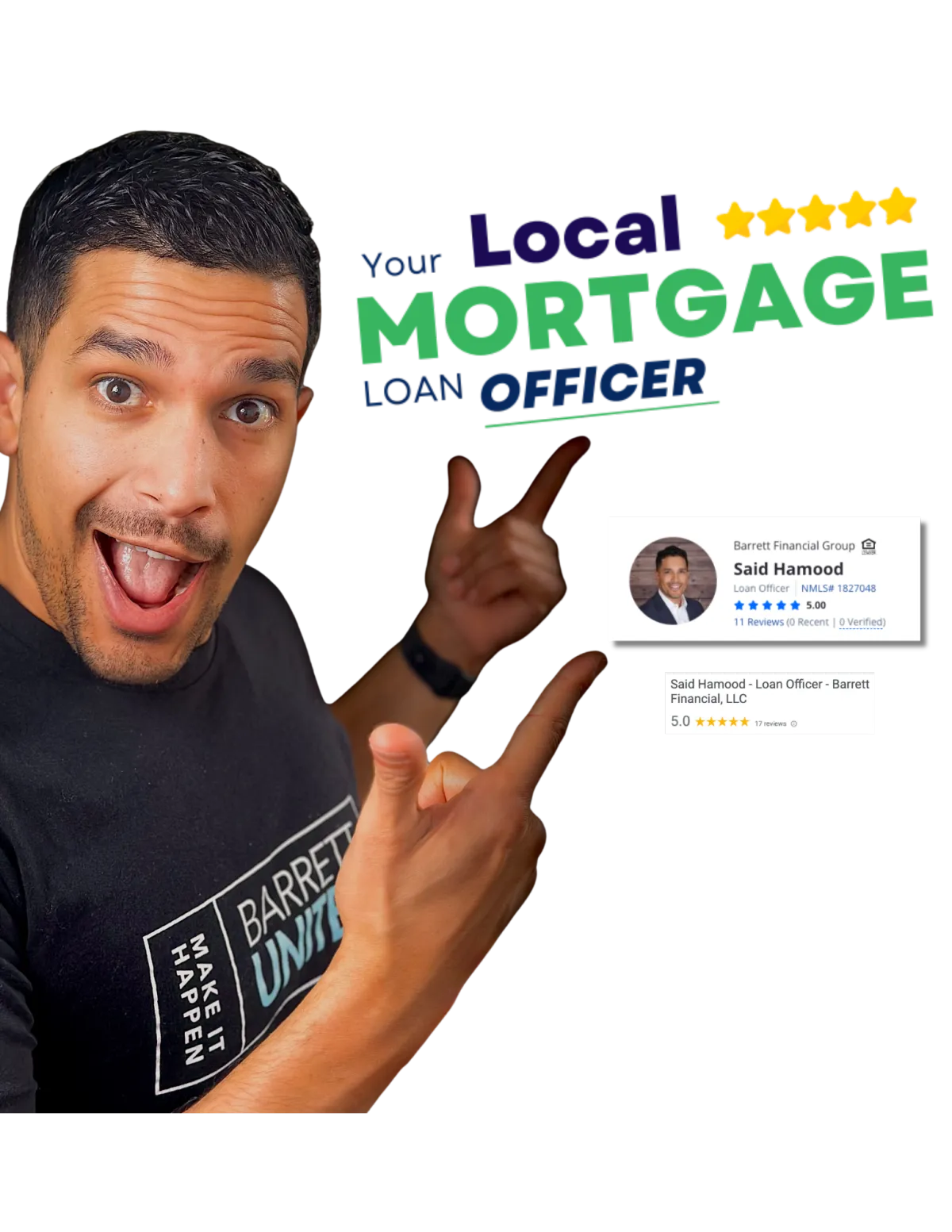
Said Hamood - Seattle Mortgage Broker - NMLS#1827048
Said Hamood | NMLS #1827048 | Barrett Financial Group, L.L.C. | NMLS #181106 | 275 E Rivulon Blvd, Suite 200, Gilbert, AZ 85297 | TX view complaint policy at www.barrettfinancial.com/texas-complaint | WA MB-181106 | Equal Housing Opportunity | This is not a commitment to lend. *All loans are subject to credit approval. | mlsconsumeraccess.org/EntityDetails.aspx/COMPANY/181106