

Simplifying Homeownership
See EXACTLY How Much Home You Qualify For Today!

Simplifying Homeownership
See EXACTLY How Much Home You Qualify For Today!

Learning Center

5 Social Media Mortgage Myths Washington State Homebuyers Should Ignore
5 Social Media Mortgage Myths Washington State Homebuyers Should Ignore
Scroll through any feed and you will find a confident stranger explaining how mortgages "really" work. Some of it is helpful. A lot of it is wrong, and for a WA homebuyer in Seattle, Bellevue, Tacoma or Spokane, a bad assumption can mean waiting years for a home you could have bought already. As a mortgage broker in Washington, I hear the same myths every week. Here are the five that come up most, with direct answers you can rely on.
Why Mortgage Misinformation Is Everywhere Right Now
Buyers are stretching budgets, comparing notes online, and trying to decode a market that changes quickly. Short videos reward bold claims, not nuance. The result is that many would-be buyers rule themselves out before ever speaking with a lender. The fix is simple: get your numbers reviewed by a licensed professional who knows Washington state mortgage programs.
Myth 1: "You Need 20% Down to Buy a Home"
This is the most expensive myth in real estate. Many buyers can purchase with far less than 20% down. Options commonly used by Washington buyers include:
- Conventional loans: Low down payment options exist for qualified buyers, typically with mortgage insurance until you build enough equity.
- FHA loans: Designed for flexible credit and lower down payments.
- VA loans: Eligible veterans and service members may be able to buy with no down payment.
- USDA loans: Available in eligible rural areas of Washington with no down payment.
- Down payment assistance: Washington State Housing Finance Commission programs may help eligible buyers with down payment and closing costs.
Putting less down does raise your monthly payment, so the right choice depends on your full picture. That is a conversation worth having before you rule anything out.
Myth 2: "You Need Perfect Credit"
You do not need a flawless score. Different loan programs have different credit requirements, and lenders look at the whole file: income stability, debt-to-income ratio, savings and employment history. A Seattle home loan approval is not a pass/fail test on a single number. If your credit needs work, a mortgage broker can often show you which specific steps move the needle fastest.
Myth 3: "Wait for Rates to Drop, Then Buy"
Trying to time rates is a gamble. If rates fall, you can often refinance later, but you cannot go back and un-pay a higher price if competition pushes home prices up. Waiting also has a cost: every month renting is a month not building equity. A better question than "when will rates drop?" is "what payment fits my budget today, and what is my plan if rates improve?"
Myth 4: "A Bank Always Gives You the Best Deal"
A single bank can only offer its own products. A mortgage broker shops multiple lenders and loan programs on your behalf, which can help you compare rates, fees and terms side by side. Always compare the Loan Estimate documents, not just the advertised rate, so you see the true cost of each option.
Myth 5: "The Loan Limit Means You Can't Buy in Seattle or Bellevue"
Washington's higher-cost counties have higher conforming loan limits than the national baseline, set each year by the Federal Housing Finance Agency. King, Pierce and Snohomish counties are among the areas with elevated limits, so many Puget Sound purchases fit conventional or government financing. If your price range goes above the limit, jumbo and non-QM programs are available. Check the current limit for your specific county before you assume anything.
What To Do Instead of Trusting a Viral Video
- Get pre-approved: It turns guesses into real numbers.
- Review your credit report: Fix errors early.
- Map your cash to close: Include down payment, closing costs and reserves.
- Compare programs: Ask about conventional, FHA, VA, USDA and assistance programs.
- Ask for a Loan Estimate: Compare offers apples to apples.
FAQ
How much do I need to put down to buy a home in Washington state?
It depends on the loan program. Some conventional programs allow low down payments, FHA allows low down payments, and VA and USDA loans may allow zero down for eligible buyers. A pre-approval will show what fits your situation.
Can I buy a home in Washington with less-than-perfect credit?
Often, yes. Programs such as FHA are built with more flexible credit guidelines, and a lender can review your full profile to find the best path.
Should I wait for mortgage rates to fall before buying in Seattle?
Nobody can reliably predict rates. Many buyers purchase when the payment fits their budget and plan to refinance if rates improve, though refinancing is never guaranteed.
What is a mortgage broker and how is it different from a bank?
A mortgage broker is a licensed professional who works with multiple lenders to find a loan that fits your needs. A bank loan officer can only offer that bank's products.
Are there down payment assistance programs in Washington?
Yes. The Washington State Housing Finance Commission and some local programs offer assistance to eligible buyers. Eligibility depends on income, location and loan type.
What are the conforming loan limits in Washington?
Limits are set annually by the FHFA and vary by county, with higher limits in high-cost areas such as King County. Ask your loan officer to confirm the current limit for the county where you are buying.
Work With a Washington State Mortgage Expert
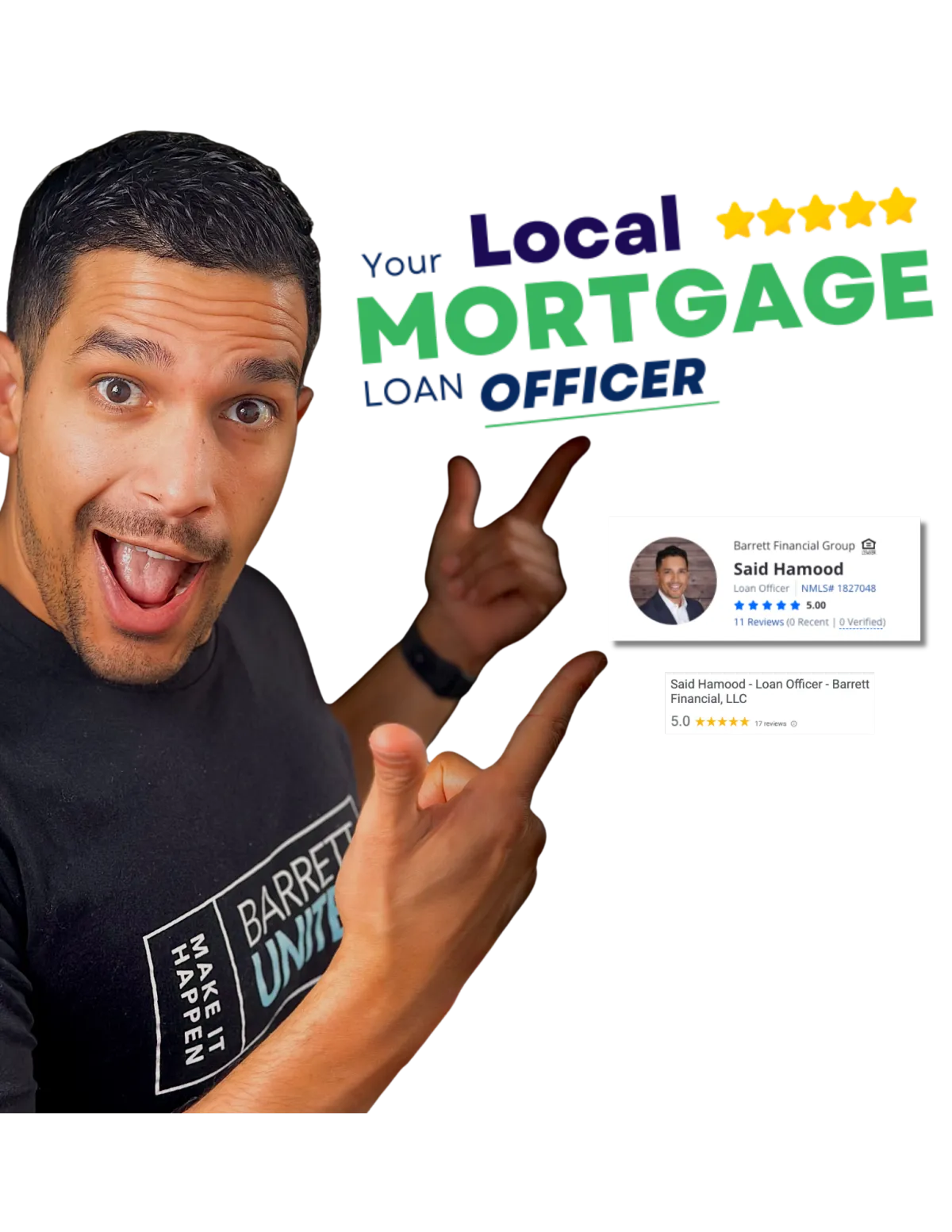
Every buyer's situation is different, and the internet cannot see your income, credit, savings or goals. Said Hamood mortgage guidance is built around one thing: your best interest. Call Said Hamood at 206.947.5558 or email [email protected] for a straight-talking conversation about your options. Ready to get started? Visit saidhamood.com or call Said Hamood today to explore your options.
This article is for educational purposes only and is not a commitment to lend. Programs, limits and eligibility are subject to change. Said Hamood, Barrett Financial.

What is the first step in buying a home?
The first step is understanding your budget and getting pre-approved for a mortgage. This helps you know what you can afford and shows sellers that you're a serious buyer. I can guide you through this process to make sure you're prepared and confident.

How much money do I need for a down payment?
Down payments typically range from 3% to 20% of the home’s purchase price, depending on the type of loan you qualify for. There are also programs for first-time homebuyers that may offer down payment assistance. I can help you explore your options.

What does pre-approval mean, and why is it important?
Pre-approval means a lender has evaluated your financial information and determined the loan amount you're eligible for. It’s crucial because it gives you a clear idea of your budget, helps you compete with other buyers, and speeds up the closing process once you find a home.

What types of loans are available for first-time homebuyers?
There are several loan options, including FHA loans, USDA loans, and conventional loans. The best option for you depends on factors like your credit score, income, and the location of the home. I can help you compare the options and choose the best one for your situation.

How do I know if I qualify for a mortgage?
Lenders look at factors like your credit score, income, debt-to-income ratio, and the amount of money you have for a down payment. The good news is that I work with a range of clients, from those with perfect credit to first-time buyers, to help you find the right path to homeownership.

What are closing costs, and how much should I expect to pay?
Closing costs usually range from 2% to 5% of the home's purchase price and cover fees like appraisals, inspections, and lender charges. I’ll help you understand all the costs involved so there are no surprises at the end of the process.

Can I get a mortgage if I have student loans or other debt?
Yes! Many buyers with student loans or other forms of debt still qualify for a mortgage. Lenders look at your overall financial picture, including your income and debt-to-income ratio. Let’s talk through your situation, and I’ll help you find the best solution.

How long does the home buying process take?
The process typically takes about 21 to 45 days from the time you make an offer to closing. However, this can vary depending on factors like inspections, appraisals, and the lender's processing time. I’ll keep you updated every step of the way so you know what to expect.

What happens if my offer on a home is accepted?
Once your offer is accepted, the next steps include signing a purchase agreement, scheduling inspections, and finalizing your mortgage application. From there, the lender will process your loan, and we'll work together to ensure everything is in place for a smooth closing.

How do I know if I’m ready to buy a home?
If you’re financially stable, have a reliable income, and can afford a down payment and monthly mortgage payments, you might be ready. I’ll help you assess your financial readiness and guide you through the process to ensure you’re making the best decision for your future.

What is an FHA loan?
An FHA loan is a government-backed mortgage designed to help first-time homebuyers and those with less-than-perfect credit. It typically requires a lower down payment (as low as 3.5%) and has more flexible credit requirements, making it an excellent option for those who might not qualify for conventional loans.

What is a VA loan, and who qualifies?
A VA loan is a mortgage loan backed by the U.S. Department of Veterans Affairs, designed for military service members, veterans, and certain members of the National Guard and Reserves. It typically requires no down payment or private mortgage insurance (PMI), making it a great option for those who qualify.

What is a USDA loan?
A USDA loan is a government-backed mortgage offered to homebuyers in rural and suburban areas. It requires no down payment and offers competitive interest rates. To qualify, buyers need to meet income and property location requirements, making it a great option for those looking to buy in rural areas.

What is a conventional loan?
A conventional loan is a mortgage that is not insured or backed by the federal government. These loans usually require a higher credit score and a larger down payment than FHA loans, but they come with more flexible terms and potentially lower mortgage insurance costs if you put down at least 20%.

What is a jumbo loan?
A jumbo loan is a type of mortgage that exceeds the conforming loan limits set by the Federal Housing Finance Agency (FHFA). These loans are typically used for luxury or high-value homes and require stricter credit and income qualifications. They also tend to have higher interest rates due to the larger loan amounts.

What is a fixed-rate mortgage?
A fixed-rate mortgage is a loan with an interest rate that stays the same throughout the life of the loan, typically 15, 20, or 30 years. This provides stability and predictable monthly payments, making it a popular choice for many homebuyers.

What is an adjustable-rate mortgage (ARM)?
An adjustable-rate mortgage (ARM) is a type of loan where the interest rate can change periodically based on market conditions. ARMs typically start with lower rates for the first few years and then adjust. While this can offer lower initial payments, it comes with more risk as rates can increase over time.

What is a renovation loan?
A renovation loan, like the FHA 203(k) loan, allows you to finance both the purchase of a home and the cost of repairs or renovations in one loan. This can be a great option if you want to buy a fixer-upper and make improvements to it, as it allows you to finance the project upfront.


"I educate first-time homebuyers so they can make informed decisions"
Said Hamood - Seattle Mortgage Broker - NMLS#1827048
Said Hamood | NMLS #1827048 | Barrett Financial Group, L.L.C. | NMLS #181106 | 275 E Rivulon Blvd, Suite 200, Gilbert, AZ 85297 | TX view complaint policy at www.barrettfinancial.com/texas-complaint | WA MB-181106 | Equal Housing Opportunity | This is not a commitment to lend. *All loans are subject to credit approval. | mlsconsumeraccess.org/EntityDetails.aspx/COMPANY/181106